Genealogy was teaching us lessons on MLK Day…

Genealogy was teaching us lessons on MLK Day…

During this recent Dr. Martin Luther King holiday weekend, we received one of those messages on Ancestry.com that you dream of. Through Felice’s paternal grandmother’s DNA, we had a 5-8th cousin reaching out to help try and draw the line between the tests, and while their theory probably doesn’t match up as she thought it might, it did highlight 3x great-grandparents we hadn’t yet identified. From that, we’re starting to piece together a theory that’s looking pretty strong about siblings of the 3x GGP’s, and with that a good lead on new direct relatives for my wife.

Genealogy for African families is very difficult because for much of our history they were only viewed as property and what we know from that time is largely based on who survived long enough to be considered a person.

These new relatives were all born as slaves in the South before the civil war, and so very little is known about them, very little was recorded, and even less survived. Good theories may be all we can ever piece together to explain the DNA connection we now know we share…and it seemed appropriate that this excitement, and struggle, should happen during the weekend we put aside to honor the struggle of our ancestors to be allowed to be human and citizens in the United States.

But like many lessons taught by Dr. King, there is a level even deeper than that which became apparent only after we thought about it and discussed it more.

By contrast, my genealogical line is much better defined, as most northern European/British lines are. In addition to being a Mayflower descendent, I have several lines that go back to the early 1630’s in the new world, and all of my relatives had arrived in the United States by 1850. This means I have a great deal of documentation on my ancestors, and it means I only have questions about the identity of 3 of my 32 3x GGP.

Felice’s line has only about 12 of 32 3x GGP’s identified, and since both of our relatives in that generation would have been born between 1800 and 1850, it’s surprising we have as many of her line identified as we do. It’s an obvious truth: genealogy for European

Screen Shot 2018-01-20 at 3.06.18 PM
There is more to the “1870 wall” than slavery

families is much easier pre-civil war because they were considered humans, even if they were largely disdained at times; genealogy for African families is very difficult because for much of our history they were only viewed as property and what we know from that time is largely based on who survived long enough to be considered a person.

While we were both excited and troubled (as you are when you discover new relatives who were born as property) by this new finding, there was another emotion: we have so much information about Felice’s father’s side of the family, and not nearly as much as her mother’s…and here’s another breakthrough on her father’s side.

As we talked, and thought about it, we narrowed in on why this was: the relatives on her mother’s side were subjected to the worst of the Jim Crow post-war South, and suffered for generations under economic conditions that not only led to very few records being created, it meant that there were no family historians that had the luxury of gathering stories, documents, and proof of their ancestors to pass down. They were just further victims of the social apartheid they were subjected to for another 150 years after gaining their “freedom”.

In contrast, her father’s side of the family had several relatives that broke that cycle in the late 1800’s. A few relatives owned property by 1880 and were able to work it independently and keep the profits/proceeds. Another owned a cotton gin in 1875 and used that buy property, and spread the wealth to his children so they could be above the lowest social rungs. Felice’s paternal grandmother’s parents owned their land in Arkansas, and so the descendent of the original slaveholder in the neighborhood, who now managed a massive sharecrop (read exploitation/subjugation) organization in Ashley County would come to her father at harvest time and ask if he would help harvest his crop. He would refer to her father as sir, and ask please. He would take “no” for an answer, and pay him market price for what he helped harvest…the same as his white help.

It’s not just chance that we have more information on this side of her family. They were not as impoverished, they had the luxury of history and time to collect the information we now have. Just as my great-grandmother on my father’s side was completing her DAR application, and gathering so much of the amazing material I have today in the early 1900’s, so too were parts of Felice’s family. Today, there are multi-state bi-annual family reunions on some lines, and books published, and for others there’s a network of researchers who capture new DNA matches and connect the historical dots for us.

But her mother’s side heartbreakingly illustrates the subtle effects of the brutal oppression they suffered, and the echoes of which linger for generations after…even after many of the children escaped North during the Great Migration. Her mother’s family was largely sharecroppers, at best, and we regularly see 50% child mortality in these lines. The mothers often had more than 10 children, and we can only imagine how they struggled to make ends meet. They were living in the worst of the deep south, in the parts of Mississippi that were still stringing up African Americans regularly well into the 1960’s.

U1292863INP
Mose Wright testifying against the white men who murdered of Emmett Till in 1955. In doing so he “crossed a line that no one could remember a black man ever crossing in Mississippi”, and that was only 10 years before Felice’s mother was born in the same county.

For example, Felice’s mother was born in Tallahatchie County, Mississippi only 10 years after a young Emmett Louis Till was tortured and murdered in that county. At the time of her birth, no one had been convicted of that horrific murder, and it was still known as the “Free State of Tallahatchie County” since the white residents knew they could, and would, do whatever they wanted and damn what anyone else said.

This black hole of genealogy just so clearly demonstrated the devastating conditions her family survived through, that we both were speechless as it because clear to us the answer why one side was more documented than the other. While both her parents’ families survived horrible oppression in the Jim Crow South, one side had slight means and a slightly less aggressive apartheid to allow them a sliver of advancement out of Arkansas.

The other side was in Mississippi, which freely and deeply continued to destroy the identities and lives of black families to the point of there being few official records, and those records are still very inaccessible. The official policy continued to be to deny the humanity of African Americans even after the world tried to force them to accept these people as people. That side of the family could barely feed itself, and couldn’t even accuse white people of a crime for most of their existence. Family history couldn’t be less important in those circumstances, and we see that today by the complete lack of their history beyond a basic census every 10 years.

It’s another example of how what isn’t in your family history can be as valuable as what is, and it’s another way that we learn what our ancestors faced on their journey leading to our birth. And on this MLK day, it helped our family feel more acutely the struggle and fight of those who put everything on the line to free African Americans from the oppression of the American government and culture…which is exactly what we should do on this holiday.


RootsMagic is so good, we’ll buy it for you. Seriously.

RootsMagic is so good, we’ll buy it for you. Seriously.

It’s official…we’ve converted all my trees to RootsMagic, synced them up to Ancestry.com without issue, and I’m done with Family Tree Maker. My only regret is that we wasted as much time (and blog posts!) waiting for FTM 2017 as we did. Months after we paid $29.99 to pre-order the version of Family Tree Maker, and four months after we were promised the product, we still can’t sync my main tree with Ancestry.com (Family Tree Maker 2017: 110 day (and counting) since we had working software). I tried RootsMagic as a test, and it’s synced first time/every time, and migration was nearly painless (Quick Review: RootsMagic 7.5 now sync’s with Ancestry.com, effectively killing MacKiev’s Family Tree Maker).

In order to pull people from FTM, RootsMagic is offering those of us who have an Ancestry.com subscription the full version of RM 7.5 (which includes TreeSync) and an E-Book with tips/tricks for using RootsMagic for $20 until July 31st!! That’s less than we paid for the FTM pre-order than never worked!!

We’re not sure you can get your money back from Software MacKiev for their failed product, but we’re happy to give you a reason to get out from underneath Family Tree Maker and on to a product that works and is supported, without having to spend more to do so.

So, here’s what we’re going to do: We’re going to buy you RootsMagic 7.5. The first 100 readers that made the mistake of pre-ordering Family Tree Maker 2017 who take advantage of the RootsMagic special (RootsMagic Special Offer) which gives you RootsMagic for $20, by July 31, 2017 will get a check from us for $20. Send us a copy of your pre-order email, and your RootsMagic confirmation email (send to: rick@anamericangenealogy.com), and we’ll mail you check for $20. It’s that easy.

Order Emails
Send us these two emails, and we’ll cut you a check for $20!

We’re not sure you can get your money back from Software MacKiev for their failed product, but we’re happy to give you a reason to get out from underneath Family Tree Maker and on to a product that works and is supported, without having to spend more to do so. As always we are sponsored by no one, and we aren’t affiliated with RootsMagic in any way, this is just an incentive to help others who love this hobby to get back to using the tools they need.

Speaking of which, we’ll have one more deep dive into migrating from FTM to RootsMagic in the next week or so, and then enough talking about software, and back to talking about our person journey!

Family Tree Maker 2017: 110 day (and counting) since we had working software

On April 1, 2017 Ancestry discontinued support for TreeSync, rendering the software largely unusable for many FTM users. Software Mackiev was unready for that change, even though they had not only known it was coming, but they had gotten a 4 month extension from the original target date from Ancestry. Three-and-a half months later Jack is cheerfully trumpeting that we’re at the finish line…but for a large chunk of FTM users, we’re not closer to getting back to the basic functionality we enjoyed on March 30.

I keep seeing Jack (and his wife apparently) complain about how much “free” software they’ve “given away”, and how hard they are hawking $20 hats and other trinkets to recoup their expenses

That’s bad enough, but the kicker is this: once the software works as it once did, you’re likely to be disappointed about how it’s essentially the same software you’ve used for

Screen Shot 2017-07-20 at 8.52.09 AM
 I’m not allowed to release screen caps of FTM 2017, but to get an idea of what the “People” tab looks like, imagine the colors are reversed, the boxes are little more square, and the pictures are smaller and hard to see

years. This “update” is nothing more than restoring lost functionality, and a photo feature that has almost no controls and you’ll never use. We’ve waited all this time, paid our money and waited, suffered through not being able to effectively use the tool that is central to our work…for essentially nothing new.

It’s the same interface, with the colors reversed. The SUPER ugly/kludgy Ancestry Hint merge screens? Same. The People/Facts screen? Same. Places, Media, Sources? Same. It look EXACTLY the same. Maybe color coding will be helpful down the road…but I promise you I wouldn’t have taken my trees offline for 4 months for color coding. Or a photo tool that does next to nothing, and doesn’t do what it claims to do very well.

Going back several months, I said my worry was that this software company was over their head with this package (Mackiev’s latest update engenders even less confidence, puts 2017 release 3 weeks behind with no firm date for release). Mackiev is a company that has focused on smaller, offline, products. This was a huge step into a product that had a large, passionate, knowledgeable and that was connected to a 3rd-party, online vendor, and they clearly weren’t ready.

In my support sessions they have indicated that they are “overwhelmed” by the issues related to this “finish line” release, and they can’t deliver ETA’s for either resolution or even response. It’s clear to me that they overestimated how “done” this release was, so they are understaffed to deal with the volume of issues they’re facing.

Screen Shot 2017-07-20 at 8.07.55 AM.png
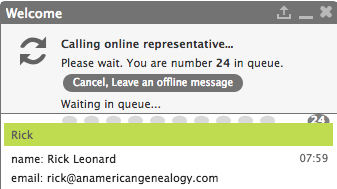
Only 24th in line this time…better than 38th last time! No help either time, regardless of the wait

This continues a long line of underestimations by this company, from thinking a handful of beta testers would suffice, then 1,000, then 25,000 to thinking they would release the first beta in November of 2016 when they couldn’t release it until well after April 1st.

I have no confidence this product will survive. Given my decades of software deployment and support, it seems likely they completed this release at GREAT cost to the company, sell the release as long as there is demand, and then sunset the product before they have to do another release. I keep seeing Jack (and his wife apparently) complain about how much “free” software they’ve “given away”, and how hard they are hawking $20 hats and other trinkets to recoup their expenses. Not a good sign…but there’s not a good sign anywhere with this company…

Screen Shot 2017-07-20 at 9.42.26 AM.png


TEST DRIVE: My 48 hours with the new Family Tree Maker 2017

TEST DRIVE: My 48 hours with the new Family Tree Maker 2017

I finally was notified Friday night of my eligibility participate in MacKiev’s 48-hour beta test of FTM2017. While I have been, and will continue to be, critical of the process (Mackiev’s latest update engenders even less confidence, puts 2017 release 3 weeks behind with no firm date for release) I was largely happy with the new software, and can’t wait for it to go live.

Listen to their advice: Use a practice/non-critical tree for your testing.

I have over 20 years experience testing software releases (MacKiev 2 weeks late with Family Tree Maker 2017 release, still “getting close”), so I’ve been through this before, however for this beta test I didn’t do an exhaustive breakdown of every feature or even attempt to use the new features. I just kept it simple, focused on how to sync with my existing FTM 3 trees that were linked to Ancestry.com, and went through a few generations of new ancestors to a speculative tree I’d chosen to test with.

That brings me to my first impression. Listen to their advice: Use a practice/non-critical tree for your testing. My concern wasn’t about data loss, and I don’t think there’s a reason to be concerned about that, but since my larger trees have multiple owners/editors/viewers, if I had to re-upload them Screen Shot 2017-04-30 at 3.04.24 PM.pngand reassign those it would be difficult. I feel like it was good I was concerned about that as it relates to a test, and like it will be less of a concern when we’re not limited to a short beta.

Other than that, I feel that the interface was easy to understand, and as a long-time user of Family Tree Maker there were no surprises. Due to a confidentiality agreement I agreed to I won’t go into detail about look/feel/placement of things in the application, but I think it’s safe to say I felt like it was not much of a learning curve going from FTM 3 to FTM 2017. My impression was that overall, FTM 2017 felt more modern, updated and refreshed.

My impression is that this is a mature, (nearly?) ready for production release software package that will be a welcome refresh for FTM users. I have some complaints, but since I can’t yet discuss features or how/if various features have changed, I can’t go into them until Family Tree Maker is released to the public. Generally I’ll say that given MacKiev’s spotty rollout of this product, and some of the complaints I can’t yet detail, Family Tree Maker 2017 is likely to keep me satisfied in the short-to-medium term while I start to research alternatives just in-case this is as good as it gets.

MacKiev 2 weeks late with Family Tree Maker 2017 release, still “getting close”

MacKiev 2 weeks late with Family Tree Maker 2017 release, still “getting close”

The latest update on the Family Tree Maker 2017 release (Read Here) is very upbeat, and positive…and completely discouraging.

The entire process of this release was not managed in a way to give any of us confidence. There is no excuse for TreeSync not working without a working replacement.

Two things I want to make clear off the bat: First, I think that eventually MacKiev will release a product that satisfies us, and does what we expect from Family Tree Maker. Second, I’ve worked in IT for over 25 years and have been a part of more software development/deployment schedules than I can count. I’ve generally worked on large Enterprise projects, and I currently work for one of America’s largest retail chains managing a group that supports technologies used to deploy over 500 software developments used to generate billions of dollars in annual revenue. So, I feel confident making observations about the process of deploying commercial software.

The entire process of this release was not managed in a way to give any of us confidence. There is no excuse for TreeSync not working without a working replacement. This is a combination of the Private Equity Group that owns Ancestry.com not having a commercial interest in whether FTM lives or dies, and MacKiev not having the team to support a major commercial software package.

PEG’s are known for squeezing blood from stones, for breaking up companies into components that make up more than the whole, while spending as little money as possible doing so. The goal of a PEG is to maximize profit for the short period of time they own the company. They buy a company for $1.6 billion, close the unprofitable ventures (even if they might later generate revenue), spin off the less profitable parts of the company, cut administrative cost-centers to the bone, and funnel all capital funding to areas that will generate the most revenue. You can see this with Permira Advisers LLP’s treatment of Ancestry.com, and while someday they will sell the business for billions more than they paid for it, they saw no value in Family Tree Maker and cut it loose.

As for MacKiev, they knew they had a hard deadline to make this work, they had one duty as a company: make sure FTM worked before that deadline.

They also know they aren’t making much money on the continuing support of FTM, or TreeSync/FamilySync, and so there’s very little incentive for Ancestry.com making it work beyond the bare minimum.

As for MacKiev, they knew they had a hard deadline to make this work, they had one duty as a company: make sure FTM worked before that deadline. It’s easy for me to judge sitting here, but if you work for an Enterprise software company you know that if you have a deadline that’s not negotiable, then you have to be ready by that date. It would require NDA’s to cover any current projects of mine, but we face deadlines set by factors like regulatory compliance, business requirements, customer requests, etc. at any given moment, and we don’t miss those deadlines. I support lines of business that generate 8 figures a day, and there’s no way we’d have a 3 week gap in functionality. A well run organization that’s staffed properly, and that’s managed to support their customers, doesn’t allow a 3 week gap in functionality.

What gives me the most pause, is that the company that’s known for Mavis Beacon’s Typing Tutor and the Stellaluna software now has a major commercial product with a passionate base, and they don’t seem equipped to support it.

I see a lot of red flags with the way this company is approaching this deployment.

Their releases seem defensive (“Urban Myths about FTM – Debunked”), or they are deflecting (“TreeSync which was retired on March 29th. And really, it was supposed to be retired much sooner”), or blaming someone else (“Q: Why did Software MacKiev shut off our syncing? A: Well actually, we didn’t. That would be Ancestry’s TreeSync which was retired on March 29th.”). There’s not much more they can say I suppose, but it would engender more trust and confidence if they were more honest about their misses.

I see a lot of red flags with the way this company is approaching this deployment. It’s clear they didn’t have proper testing setup. They were racing for an April 1st deadline, and after the target ship date their QA team was still finding showstopper bugs. On April 2nd they said they could ship anytime now, but they were just being extra careful. However, it wasn’t until 4 days later they announced they had finally setup a real-world, large-scale testing protocol and figured out how to use SMS to coordinate, and that testing had revealed more showstoppers that prevented the release. In-fact, they were addressing basic architecture and connectivity planning nearly a week after their target production release. This is not normal, this is not expected in the industry, and this is not acceptable on April 6th.

If this was the process on December 1, 2016 for an expected shutdown date of December 31st, I’d say we’re about at where we should be, although it would worry me we’re still dealing with fundamental test protocols and architecture issues this late in the game. But, I’ve seen worse, and given a team I trust I’d be ok…but the risk level would be yellow. However, to be dealing with this 2 weeks after go-live is not just unacceptable, it’s hard to understand how they think this is ok. I get that at some point, what is is, and if you’ve screwed up a deployment you just have to power through to get to the point it’s resolved, but to-date I haven’t seen anything but positive messages on how good it is that they are catching these issues.

And that’s the biggest red flag of them all. They keep hiding behind the “we want to get it right” statement, and I see people in various forums making the same point. Of course, we ALL want this software to be released when it’s right. We don’t want faulty software released early to meet a deadline. But it’s like saying you won’t sell a new car until you’re sure the wheels won’t fall off as you leave the lot. Of course we don’t want the wheels to fall off; it’s just a fundamental assumption, not a selling point!

We care about this because we love this product, we have years invested in it, and this tool is a big part of something important in our lives. When Ancestry.com cut us loose, it led to a lot of soul searching and considering the huge work to move to a new product. I had concerns about a little company like MacKiev taking over a huge project like this, but given Ancestry’s involvement, and a lack of choices, I hoped for the best. But now it seems like MacKiev approached this with little more than hope, and Ancestry’s involvement has limits. Trust is key on something we all care so much about, and these companies have done all they can to minimize that trust.

I think it will all end up ok, and I’m hopeful we’ll look back a couple of years and be happy with where MacKiev advanced Family Tree Maker. But right now it’s little more than hope, and I’ll settle for just syncing a tree.